
Atlantic hurricane season runs June to November, and in Fort Bend County the damage that follows a storm is usually water rather than wind. Preparation done in spring is worth far more than anything attempted once a system is in the Gulf.
Drainage comes first
Most storm water damage in Rosenberg starts at the perimeter of the building, not the roof. Clear the gutters properly, extend downspouts so they discharge well clear of the slab, and check that soil grade falls away from the house on every side. Where mature trees overhang the roof, as in parts of Bending Oaks, leaf litter blocking a gutter is a routine cause of water backing up under the eaves.
Clay soil drains slowly. Anywhere water visibly pools in the yard after ordinary rain is somewhere it will pool much deeper after a storm.
The roof and the envelope
- Have loose or lifted shingles refixed before the season, not after the first warning.
- Check flashing around vents, chimneys and skylights, which is where most roof leaks actually begin.
- Reseal gaps around window frames and exterior door thresholds.
- Make sure attic vents are intact, since wind-driven rain enters through damaged vents readily.
- Trim branches that overhang the roofline.
Insurance timing
This is the detail that costs people the most. NFIP flood policies carry a 30-day waiting period from purchase. Once a storm is named and forecast into the Gulf it is far too late. Flood cover is bought in February, not August. While you are at it, check whether your wind and hurricane deductibles are flat amounts or percentages of the insured value, because the difference is substantial.
Documentation
Photograph or video the entire property, inside and out, including serial numbers on major appliances. Store it in cloud storage, not as paper in the house. Keep policy numbers and carrier contact details somewhere reachable without power. This is the single fastest thing you can do to shorten a claim later.
After the storm
Document before you touch anything, and note carefully which water came from where. If the property took both wind-driven rain through a damaged roof and rising water at ground level, that claim splits between two policies with two adjusters and two deductibles, and the distinction is made on your evidence.
Treat any water that crossed open ground as contaminated. Storm water is category 3, so porous material that absorbed it is removed rather than dried, and surfaces are disinfected before structural drying and dehumidification begins. Commercial premises have the added problem of stock and records, which is where commercial water damage repair and document recovery run in parallel with the building work.
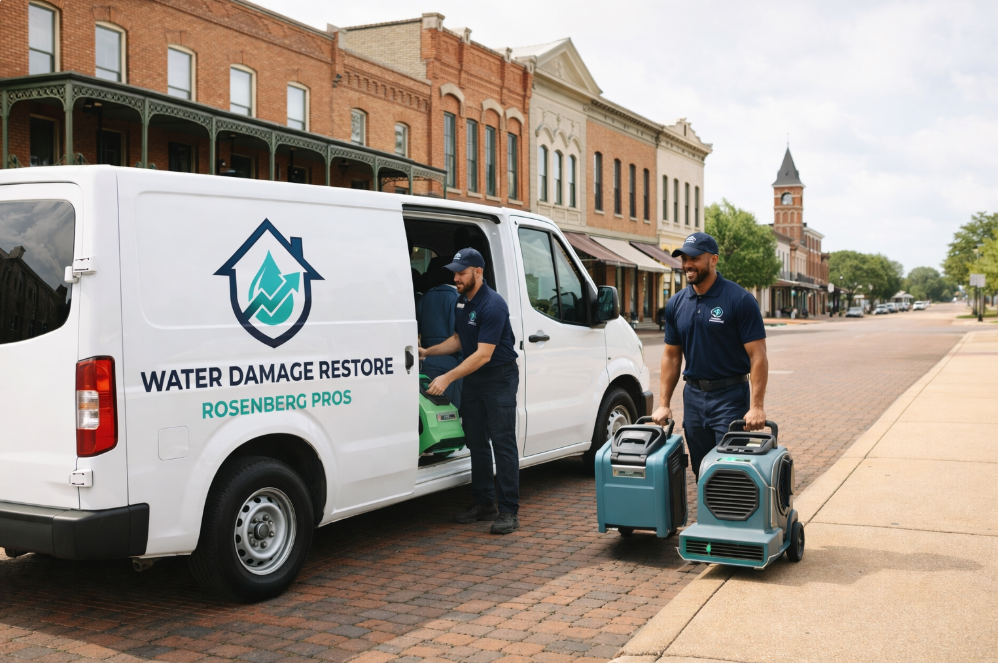
We respond throughout Longwood, Myrtle, Herff Farms and the rest of Rosenberg during and after storm events.
Frequently Asked Questions
When should I buy flood insurance?
Well before the season starts. NFIP policies have a 30-day waiting period, so cover bought once a storm is named will not be in effect for that storm.
Is wind-driven rain through a damaged roof treated as flood?
No. Rain entering through a storm-created opening is normally covered as wind damage under the homeowners policy. Only water that rose from ground level counts as flood.