
This is the question we are asked more than any other, and the answer turns on one distinction that policies state plainly but few owners know before they need it: where the water came from.
Usually covered: sudden and accidental discharge
A standard Texas homeowners policy covers water that escapes suddenly and accidentally from inside the home. A supply line that fails, a water heater that ruptures, a washing machine hose that splits, an air handler that overflows its pan. The damage the escaping water does is covered. The failed component itself often is not, which surprises people.
Usually not covered: rising water
Water that arrives from outside at ground level is flood, and flood is excluded from every standard homeowners policy. That means the Brazos over its banks, street flooding, and sheet flow across a saturated yard. Covering it needs a separate NFIP or private flood policy with a 30-day waiting period, which matters a great deal in Fort Bend County.
The grey areas
Roof leaks. If wind removes shingles and rain enters through the opening, that is normally covered as wind damage. A roof that simply aged out and has leaked slowly is usually treated as deferred maintenance.
Sewage backup. Generally excluded unless a sewer and drain backup endorsement was added. It is inexpensive and worth having, particularly on older lines in areas like Downtown Rosenberg. See our note on sewage backup cleanup for why these losses are handled differently.
Slab leaks. Damage from the escaping water is often covered. Access, meaning breaking and repairing the slab to reach the pipe, depends heavily on the wording.
Gradual damage. The most commonly denied claim of all. Insurers argue a reasonable owner would have noticed.
What actually decides a claim
- Photographs and video taken before any cleanup, showing standing water and its full extent.
- The failure point itself, photographed in place.
- Daily moisture readings through drying, which prove the work was necessary and was completed to a standard.
- A written scope of work.
- Receipts for everything, including emergency mitigation.
Your policy obliges you to mitigate, meaning to act to prevent further damage. Waiting for an adjuster before starting extraction can itself reduce a payout. Start mitigation, document it thoroughly, and file promptly.
Paper and irreplaceable items
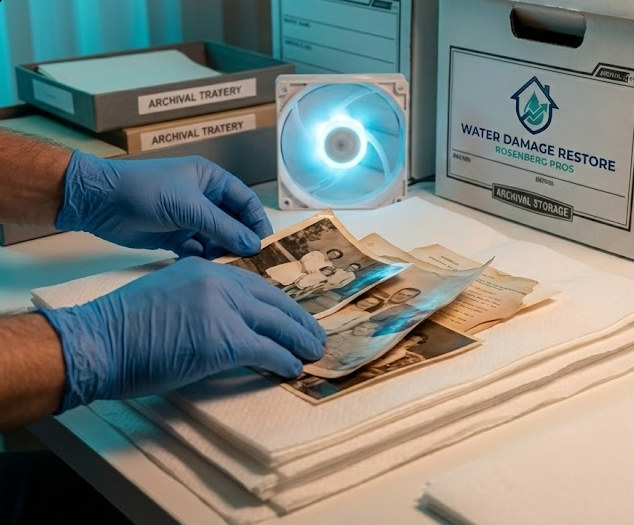
Insurers will usually fund recovery attempts on documents and photographs where the alternative is total loss. That work is time-critical, so raise it at the first conversation rather than after cleanup. We handle document and photo recovery alongside the main restoration.
Practical advice
Read your declarations page before hurricane season rather than during it. Confirm whether you hold a sewer backup endorsement and whether you have any flood cover. If your property is in or near the floodplain and you do not, that is the largest uninsured exposure most Rosenberg owners carry. We provide insurance-ready documentation on every job across Pecan Grove, Riverwood and the surrounding areas.
Frequently Asked Questions
Does my policy cover mould?
Most Texas policies cap mould remediation at a set limit, often $5,000 to $10,000, and only when it follows a covered water loss. Mould from long-term humidity or an uncovered leak is normally excluded.
Should I wait for the adjuster before starting cleanup?
No. Policies require you to mitigate further damage. Photograph everything thoroughly first, then begin mitigation and keep all receipts.