
When rainfall outpaces what the drainage system can carry, the water has to go somewhere. In older parts of the city it frequently goes backwards, up through the lowest fixture in the house.
Why older areas see it first
Drainage in the historic core of the city was installed to older standards and serves properties that have been added to over decades. Clay laterals crack with soil movement and admit roots, which narrows the pipe long before anything obvious happens indoors. Heavy rain then surcharges the system and pressurises it in the wrong direction.
Downtown Rosenberg carries more of this risk than newer subdivisions, and lower-lying streets in Myrtle and Riverwood feel it sooner when the ground is already saturated.
Telling a backup from a leak
A supply leak produces clean water, usually at one point, and it continues until you shut the main. A drain backup produces discoloured water with an odour, typically at the lowest fixture, and it tends to coincide with heavy rain or with running a washing machine or bath. If several fixtures gurgle when one is drained, the problem is in the drain, not the supply.
Why it is treated as a serious contamination
Water losses are graded by contamination, and drain backups are category 3, or grossly contaminated. They can carry E. coli, salmonella, hepatitis A, giardia and cryptosporidium. Exposure routes are ingestion, contact through broken skin, and inhalation of aerosolised droplets. Children, elderly residents, pregnant women and anyone immunocompromised should be out of the affected area until it is cleared.
What cannot be saved
- Carpet and underlay.
- Drywall to at least 300mm above the highest water line.
- Insulation of any kind.
- Particleboard and MDF cabinetry and furniture.
- Mattresses, upholstered furniture and soft toys.
- Food, including sealed packaging that contacted the water.
Hard, non-porous items such as sealed hardwood, tile, glass, metal and solid timber can usually be cleaned and disinfected. Some textiles and paper records can be salvaged through specialist recovery, but that is decided case by case.
The safe sequence
- Keep everyone, including pets, out of the affected area.
- Stop using every water fixture in the property so nothing adds to the backup.
- Ventilate if it is safe, but do not run the HVAC, which will distribute contamination through the ducts.
- Photograph everything for the claim before any removal begins.
- Call for professional sewage backup cleanup. This is not a shop-vac-and-household-gloves job.
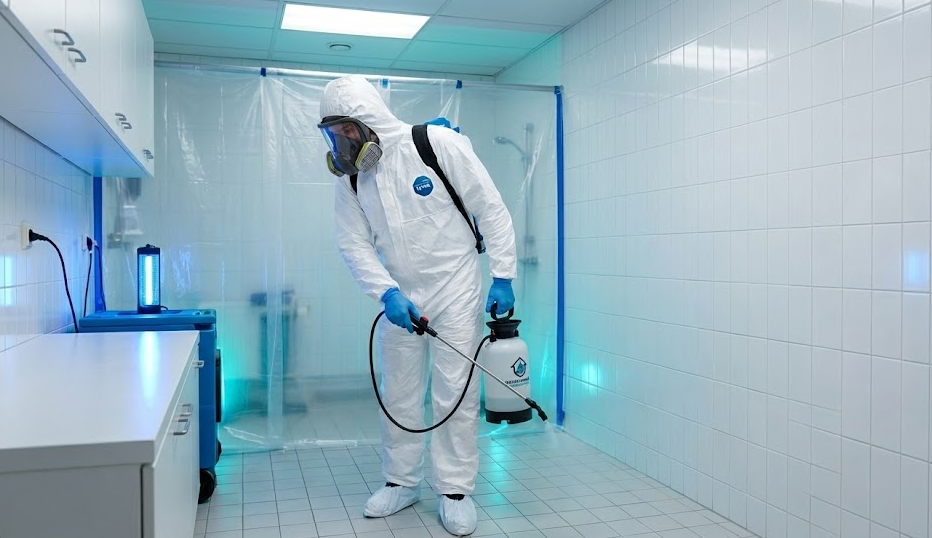
Professional work means containment, full PPE, extraction, removal of unsalvageable material, antimicrobial treatment of remaining surfaces, controlled structural drying and dehumidification to a measured standard, and verification before anything is rebuilt.
Frequently Asked Questions
Is sewage backup covered by insurance?
Usually only if you carry a sewer and drain backup endorsement. It is not part of standard cover in most Texas policies, and it is inexpensive to add.
Can I clean a small backup myself?
A very small backup on hard, non-porous surfaces can be handled with proper PPE and disinfectant. Anything that reached carpet, drywall or cabinetry should be handled professionally, because the contamination extends past what you can see.